Table of contents
Wired vs. wireless occupancy sensors: Which is better for your workplace?
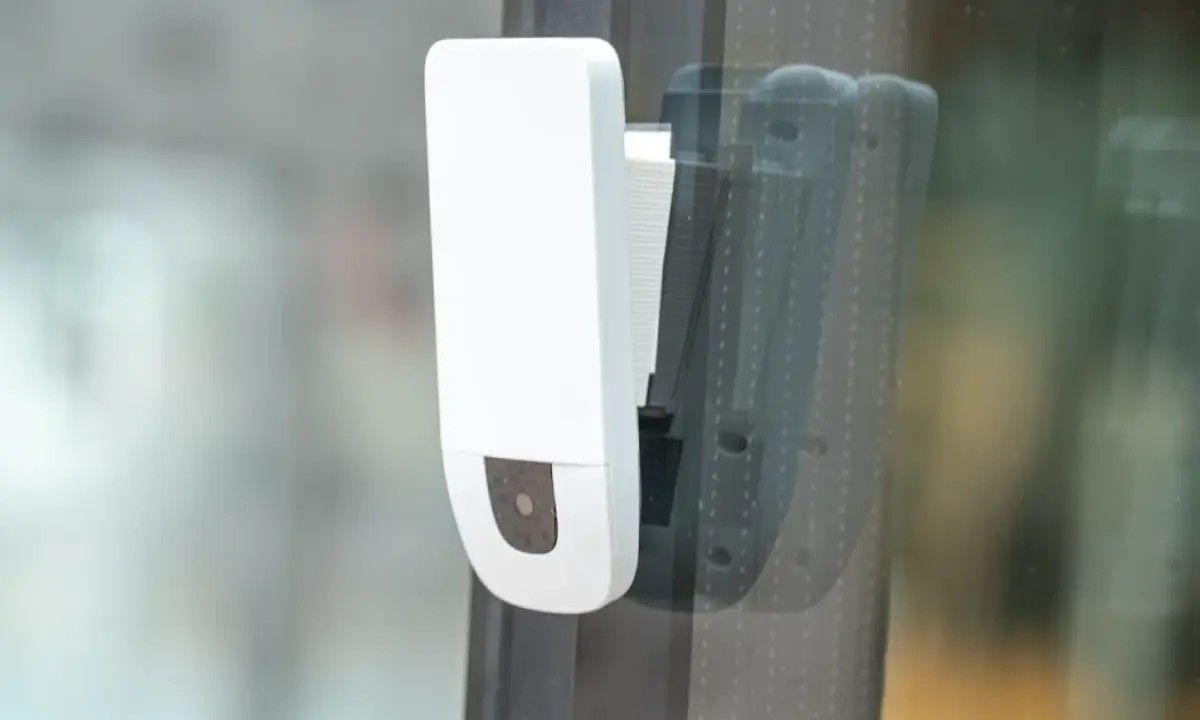
Occupancy sensors come in two main types: wireless sensors that run on batteries and wired sensors that get power and data through a single network cable, known as Power over Ethernet (PoE). If you’re planning to install sensors in your office, choosing between the two is one of the most important decisions you’ll make because the type you choose shapes everything that follows, including:
- how quickly you can get up and running,
- how much maintenance the sensors need,
- how up-to-date and accurate your data is, and
- what the system will cost you over the years.
This article compares the two options to help you make the right choice for your building.
What is a wireless occupancy sensor?
A wireless occupancy sensor runs on batteries and sends occupancy data over a radio protocol such as LoRaWAN, Zigbee, Bluetooth, or a proprietary network. A gateway inside the building collects the signals and forwards them to the cloud. Common types include under-desk sensors that detect whether a desk is in use and ceiling-mounted wireless people counters that count how many people are in a room or zone.
The main appeal is speed of installation. Because these sensors don’t require cabling, you can install them under a desk or on a ceiling pretty fast. This makes them popular in office buildings where new cabling is costly or prohibited.
However, there are trade-offs. To save battery, most wireless sensors send data at intervals rather than in real time. And with hundreds of devices on a radio network, signal range and interference can affect reliability.
What is a wired (PoE) occupancy sensor?
A PoE occupancy sensor is both powered and connected through a single Ethernet cable, using the same Power over Ethernet technology that powers Wi-Fi access points and other office equipment. That cable plugs into a PoE-enabled network switch, which keeps the sensor powered and online at all times.
That constant power is the key advantage. It lets PoE occupancy sensors send data within seconds, providing real-time occupancy counts for floors, desks, and meeting rooms. It also allows more advanced processing on the sensor itself. Instead of simply detecting whether a single desk is in use, one ceiling-mounted PoE sensor can count how many people are in an entire area and where they are, so you get more detailed data from fewer devices.
The main trade-off is installation. Because each sensor needs its own network cable, PoE sensors require more planning than wireless ones. In new buildings with network cabling already in the ceiling, though, installation is usually straightforward.
6 benefits of PoE occupancy sensors over wireless sensors
PoE occupancy sensors have several advantages over battery-powered ones:
- Real-time, continuous data: Wireless sensors report at intervals to save battery. PoE sensors stream data in real time. This is especially useful if your goal is to release meeting rooms and adjust lighting and HVAC based on occupancy data.
- More accurate people counting: Constant power allows more advanced processing on the sensor itself. Instead of only detecting whether a desk or room is occupied or empty, a ceiling-mounted PoE people counter can count how many people are in an area and where they are, down to individual desks, often covering a larger area with fewer devices.
- A stable, reliable connection: Because data travels through a cable rather than over the air, you don't need to plan for radio range, worry about interference from walls or glass, or rely on a separate gateway that could drop out.
- Lower total cost of ownership: Installation costs more up front, but with no batteries and fewer devices per floor, running costs over five years and beyond are typically lower, especially across large estates.
- Security under IT control: PoE sensors sit on your managed network, so your IT team can segment and monitor them.
- No batteries to manage: Modern battery-powered sensors can run for years between changes, but battery life shortens when sensors report more often. Across hundreds of devices, replacements still add up. A PoE sensor draws power from its network cable, eliminating this issue.
What real-time occupancy data makes possible
Real-time data matters most when it drives action, not just reports. Connected to your building systems, real-time occupancy counts enable you to:
- Adjust heating, cooling, and ventilation to the number of people in each space, rather than running every floor at full capacity.
- Switch off lighting when an area is not in use.
- Release meeting rooms automatically in case of no-shows.
- Guide people to free rooms and desks on screens or in an app, so no one wastes time walking the floors looking for a space.
- Track live headcount in a building or on a floor against its capacity. In the UK, live counts can also support evacuation and lockdown planning under Martyn’s Law.
- Schedule cleaning for the spaces that were actually used, not the whole building.
Over time, the same data also helps you right-size your space by showing which floors, meeting rooms, and desks are consistently underused.
The case for acting on this data is growing. According to the British Council for Offices, UK offices average around 30% occupancy across the working week and about 40% from Tuesday to Thursday, yet most are still heated, lit, and cleaned as if they were full. The International Energy Agency estimates that operating buildings accounts for around 30% of global final energy consumption, and the UK government now intends that from 2031, privately rented commercial buildings over 1,000 m² in England and Wales must reach an EPC B rating where cost-effective, subject to legislation passing.
The savings can also be significant. The University of Wales Trinity Saint David cut its electricity and gas costs by 35%, supported by building closures based on Ubiqisense occupancy data and changing tariffs.
Scalability and flexibility
If you reconfigure a floor or start with a single area as a proof of concept, wireless sensors can be a good option.
Wired PoE sensors scale differently. Once the cabling is in place, adding a sensor only requires a free port on your network switch. And because one ceiling-mounted people counter can often cover the same area as several wireless sensors, you'll need fewer devices per floor.
Connectivity, reliability and security
Modern wireless protocols are reliable, and occupancy data needs very little bandwidth. Range and interference still matter, though: thick walls, glass, lift shafts, and metal fittings can weaken signals, so gateway placement needs careful planning.
A wired connection removes those variables and sends data continuously. Because PoE sensors sit on your corporate network, agree on network segmentation, firmware updates, and access controls with your IT team before rollout.
Privacy and data security
Whichever setup you choose, privacy should be an essential part of the decision.
Look for sensors that process data on the device itself and send anonymous occupancy counts. Also, check where the provider stores the data and how they protect it.
Certifications such as ISO 27001 and SOC 2, along with GDPR compliance, signal that a vendor takes security very seriously.
How to choose the right occupancy sensor
Wireless can make sense for a short pilot or a building that cannot be cabled. These five questions will help you decide, and for most organisations measuring over the long term, they point to PoE.
- How long will you measure? For a three-month pilot, wireless sensors get you data quickly. For ongoing workplace analytics over several years, PoE sensors avoid recurring battery changes and tend to cost less to run.
- What does your building allow? If you have accessible ceilings and existing network cabling, PoE is often simple to install. In a leased or listed building where drilling and cabling are restricted, wireless may be the only practical option.
- Do you need real-time data? If you want live room availability on screens or in an app, or want to release meeting rooms by actual use, continuous PoE data is a better fit. For monthly space utilisation reports, interval-based wireless data can be enough.
- What are you measuring? If you only need to know whether individual desks are in use, small wireless sensors under each desk can do the job. If you want to count how many people use a whole floor, open-plan area, or meeting room, you’ll need ceiling-mounted people counters. These process more data and report more often, which makes PoE the better option.
- How much maintenance do the sensors require? Multiply the number of sensors by the number of battery replacements over five years. For large estates, maintaining a wireless setup can add up, while PoE shifts the effort to the initial installation.
Frequently asked questions
Why choose PoE over wireless occupancy sensors?
PoE sensors need no batteries, send data continuously, count people more accurately, and run on a stable wired connection your IT team already manages. Over the life of a deployment, they are usually more reliable and cheaper to run.
Are wireless occupancy sensors reliable?
Yes, for certain use cases. Reliability depends on radio range, building materials, and how many devices share the network, so a site survey before rollout is worth doing.
How long do occupancy sensor batteries last?
It varies by model and reporting frequency. Many vendors quote several years, but more frequent reporting shortens battery life.
Does a PoE occupancy sensor need a separate power supply?
No. It draws power from a PoE-enabled network switch through the same Ethernet cable that carries its data.
Can I combine wireless and PoE sensors?
Yes. Some organisations use PoE people counters for meeting rooms and larger areas and wireless sensors where cabling isn’t possible.
Which one should you choose?
Wireless occupancy sensors have their place, mainly for quick pilots and buildings where cabling is not possible. For organisations that want dependable, real-time occupancy data over years rather than months, wired PoE sensors are the stronger choice: no batteries to replace, more accurate people counting, a stable connection, and lower long-term costs.
If you are planning occupancy sensing across one or more offices, a good first step is checking your existing ceiling cabling and PoE switch capacity.
Ubiqisense: Wired sensors for accurate, real-time occupancy data
Ubiqisense combines intelligent workplace occupancy sensors with a cloud-based analytics dashboard, giving you real-time and historical insight into how floors, meeting rooms, shared spaces, and desks are used.
- Privacy by design: Sensors process data on the device and only send anonymous occupancy data.
- Secure hosting: By default, Ubiqisense stores data on Amazon Web Services (AWS), with cloud gateways located as close as possible to each customer site. However, you can choose to host your data on another cloud platform or on-premises.
- Certified and compliant: ISO 27001 and SOC 2-certified, and GDPR-compliant.
- Always up to date: The sensors use a vision model based on a deep neural network (DNN) and receive new features through remote updates, with no site visits needed for sensor upgrades.
- Works with your systems: Ubiqisense integrates with meeting room booking systems, building management systems, and workplace platforms.
- One sensor, two ways to connect: Ubiqisense sensors can connect over a wired network with PoE+, where a single cable carries both power and data, or over Wi-Fi with power from a standard socket. For permanent installations, Ubiqisense recommends PoE+, because a wired connection isn't affected by Wi-Fi signal strength or interference. The Ubiqisense team can help you choose the right connection for each space.
Find out how your office is really used.